
Day 43. I received the following email yesterday from a reader:
“Just to mention it, your post today would benefit from a little more explanation of your emotions and thoughts. For example, the pictures are lovely: Where are these places and why do you find them calming? What, would you suggest, others do to find their serene moments and escapes. All this is nice, but I think you have more to give and share. I’d like to see what’s under your hood. Let us see what underpins your thoughts and thinking. Be bold. You will discover more about yourself.“
Dear reader, I will try and explain. Here goes….
I find myself going through phases as I live through, deal with, and cope with the Corona Virus and its impacts. At first, my focus was on leading (together with others) those for whom I have responsibility and who rely on me. First and foremost, taking decisions to protect my health and the health of others. Second, at the same time, assessing the potential economic impacts of Covid-19 and planing for them in real time. And lastly, most importantly, reassuring others that come what may we can and we will get through “this” together.
In addition to family, my efforts have been directed to three primary venues: Our law firm, Sulam, a non-profit in which I occupy a leadership position, and my community. While the details were different, all three had the same basic needs – (i) calm, decisive, thoughtful leadership, (ii) support and reassurance of stakeholders, and (iii) real time planing and implementation. This first phase had its share of stresses, for sure, but for me the challenge of crafting and implementing strategies and the rewarding feeling of being their for others and motivating team members to help each other were and remain big “positives” for me.
Early on I found myself writing this blog and sending a daily early morning email to my law firm. Both were intended, at least in part ,to help others deal with the obvious stresses – “Will I stay healthy?” “What will happen to my job?” “Will I be furloughed?” “What will happen to my savings?”. Since the blog and my emails were also a way for me to deal with my own concerns and stresses, I naturally turned to my photography as a means of expressing emotions, thoughts, aspirations, and hope for a better day.
Many of the images I have used in these endeavors have been of peaceful, beautiful places and things of nature. The pandemic represents a kind of “evil” i.e., what is bad in this world. The images depict the overwhelming “good’ that exists and will continue to exist, in this world long after this pandemic has passed. The daily news reports of infection and death steal hope from us. The images are intended to restore hope to me…and hopefully to others.
While many of the initial worries and stresses remain, I and likely others, are now suffering “phase two” stresses – the stress of staying at home for weeks on end, of being limited to virtual contact in lieu of interpersonal contact, of the prospect of a near term future that is undefined. For me, escaping for a moment or two to beautiful, serene places through imagery allows me to get through another day of being “cooped up” because it reminds me that the time will come when the overwhelming beauty of this universe will again be available for each of us to enjoy.
There you go, David. That is what’s under my hood.
Day 42. After another weekend spent in the house, and a rainy one at that, I long for a “day off”. For a day or two where I can go somewhere peaceful, enjoy the scenery, relax as I see fit ,and not think about the Corona virus, social distancing and stay at home orders. Each day I tell myself that I am getting closer to that day; though I know that that day is truly months away. So in the meantime I go back in time to serene places which I have enjoyed in the past and imagine myself there. Its not the same as being there but it is the best I can do for now.
Here are some of those peaceful places.






© Judah Lifschitz 2020
Day 41. Miracles really do happen even in the battle against the deadly Corona virus. The story of Eli Beer is one such miracle.
Eli Beer is the founder of United Hatzalah of Israel and President of Friends of United Hatzalah, Israel’s largest all-volunteer emergency medical response organization. He began to work at his family’s book and real estate businesses at the age of 13 and began to volunteer on ambulances at the age of 15, twice a week. At the age of 17 he realized that a more flexible system needed to be established to improve response time in case of emergencies. To accomplish this goal he founded United Hatzalah. This volunteer first responder service has grown impressively since its establishment and now has over 4500 EMT’s, paramedics and doctors volunteering within its framework. Eli Beer has been awarded numerous prizes and acknowledgments across the globe for innovative and lifesaving work.
Earlier this year Beer traveled on a fundraising trip to California, India, then to Washington DC for the annual AIPAC policy conference, and then to New York, before going to Miami. He recalled that AIPAC had put up signs about keeping distances, and not hugging or kissing. He followed those rules, but at the time, it was unclear how contagious the coronavirus really was. In Miami, he started to feel “all of a sudden” that something was wrong. He went to a doctor, who misdiagnosed him with strep throat. A few days later, “I felt like I couldn’t breathe anymore,” and he was rushed to the hospital.“They took an X-ray of my chest, and the doctor immediately put me in the intensive-care unit,” he said. “Three days later, they sent a message to my wife and kids that they want to intubate me.”
Beer was asleep for 18 days. When he came to, he thought he was on the road to recovery. But a few days later, he took another turn for the worse. They intubated him for another 12 days. Ultimately, Beer kept fighting, making progress and was eventually told he could leave. He tested negative for coronavirus three times before being discharged.
Millions of people all over the world prayed for weeks for Eli Beer’s recovery. In the end their prayers were answered Covid-19 miracle. The video in this post is of Eli Beer’s return to Israel.
Day 40. My blog post of several days ago lamented the fact that the pernicious effect of this pandemic is largely being reported by way statics which convey the enormity of the Corona virus’ deadly march through country after country at the cost of losing site of the individuals, the real people, who make up these unfortunate statics.
The Washington Post published today an article which focuses on personal human tragedies and losses. I commend it to your attention.
Faces of the dead
This is how they lived — and what was lost when they died.

APRIL 24, 2020 On my list
No infectious disease in a century has exacted as swift and merciless a toll on the United States as covid-19. With no vaccine and no cure, the pandemic has killed people in every state. The necessary isolation it imposes has robbed the bereaved of proper goodbyes and the comfort of mourning rituals. Those remembered in this continually updating series represent but some of the tens of thousands who have died. Some were well-known, and many were unsung. All added their stories, from all walks of life, to the diversity of the American experience.
MORE COVERAGE
A token of our love: A memorial for those lost to covid-19
Those we have lost to the coronavirus in Virginia, Maryland and D.C.
The first 1,000: Who the U.S.’s first victims were and what we’ve learned (Family photo)
“If there’s a silver lining to this, it’s that his story can be shared.”
Nathel Burtley, 79, was the first black superintendent of Flint, Mich. Family and friends said Burtley was determined to improve the experience of minority students, using the lessons he learned while growing up in a segregated Illinois city to fuel his work in Michigan.
Read more about him (Mari Lau)
Marylou Armer, 43, a detective for the Santa Rosa Police Department’s sexual assault and domestic violence unit, was the first California police officer killed by covid-19. She fell ill after being on the job and was denied a test three times, her sister said, inspiring a movement to protect and screen first responders.
Read more about her (Oscar Lam)
“Whoever you needed, Bob knew at least two of them.”
Bob Barnum, 64, was a descendant of circus founder P.T. Barnum, an early LGBTQ activist in Florida and a friend of one of the stars of the 1980s sitcom “The Golden Girls.” He pushed businesses in St. Petersburg, Fla., to broaden their nondiscrimination policies and ensured that the local domestic violence center was knowledgeable about LGBTQ couples.
Read more about him (Michael S. Williamson/The Washington Post)
Jerry Givens, 67, led the country’s second-busiest execution team for 17 years, presiding over 62 executions, before becoming a prominent opponent of the death penalty. He organized protests, testified before lawmakers and met with incarcerated people, corrections officers and the families of victims.
Read more about him (Louisiana governor’s office)
“To put it simply, she’s the most determined person I’ve ever met.”
April Dunn, 33, center, was an outspoken disability rights advocate in Louisiana state government. Denied a high school diploma and shut out of jobs because of her disabilities, she helped rewrite state law to make sure people like her had equal access to education and employment.
Read more about her (Family photo)
Bishop James N. Flowers Jr., 84, was a pastor in Maryland known to be unwavering in his faith. Decades before he experienced a religious epiphany, he was an up-and-coming rock-and-roll singer who enjoyed the D.C. nightlife, and, in 1961, defied society by entering into an interracial marriage that lasted a lifetime.
Read more about him (Family photo)
“After living through that hell, she was blessed with the gift of authenticity.”
Margit Buchhalter Feldman, 90, was a Holocaust survivor who dedicated her life to teaching children about the atrocities that killed around 6 million Jews. She died one day before the 75th anniversary of her liberation from the Bergen-Belsen concentration camp.
Read more about her (Family photo)
Brian R. Miller, 52, built a career in the Education Department’s Rehabilitation Services Administration after a lifetime of battling for the rights of those living with disabilities. Born with defective retinas, Miller was among the first wave of blind students to sit in classrooms alongside the sighted in the 1970s and 80s. He sang a cappella, was fluent in four languages and vowed to set foot in 100 countries.
Read more about him (Slaven Vlasic/Getty Images)
Wallace Roney, 59, was a Grammy-winning virtuoso of jazz trumpet who was mentored by Miles Davis. He performed with Davis during one of the jazz legend’s final performances.
Read more about him (Angelo Filomeno)
“Everything in Jen’s world had glitter on it. Everything had a little flair.”
Jennifer Arnold, 67, was a longtime costume dresser on Broadway for “Phantom of the Opera” and a “New Yorker through and through,” her friends and family said. She lived her life immersed in creativity, spending her childhood summers in an artist’s colony in Woodstock, dancing her way around the world in her 20s and showcasing her late father’s paintings throughout New York City. She worked the final performance of “Phantom” before Broadway went dark — and fell ill days later.
Read more about her (Family photo)
Keith Redding, 59, made friends wherever he went; even the nurses who treated him in his final days at the hospital were charmed by his easy smile and good-natured humor. Keith wore a suit every day to his job as a project manager for an FBI contractor, but he was most at home in biker boots and jeans, playing with his grandchildren or riding his motorcycle. After his death, Keith’s wife allowed doctors to share a rare 3-D image of his lungs in hope that it might aid in the fight against the disease.
Read more about him (Debra Vasalech Lyons)
“I don’t think he was ever going to be anything but someone who helped people.”
Frank Gabrin, 60, right, became the first emergency room physician in the United States to die of the virus after he treated patients in hard-hit areas in New York and New Jersey. Known for his buoyant Type A personality, he cooked lasagna dinners for his colleagues and wrote two books to help other health-care workers find purpose in their jobs.
Dez-Ann Romain, 36, was the principal at a Brooklyn high school for students who struggled and fell behind elsewhere. She pushed disadvantaged young people to succeed, building a reputation for “tough love” and sharing her own story of growing up as an immigrant in New York City.
Read more about her (Mark Humphrey/Associated Press)
“He is a truly original writer, unequaled, and a genuine poet of the American people.”
John Prine, 73, was a raspy-voiced heartland troubadour who wrote and performed songs about faded hopes, failing marriages, flies in the kitchen and the desperation of people just getting by. He was, as one of his songs put it, the bard of “broken hearts and dirty windows.”
Read more about him from Obituaries Read more about him from Opinions (Courtesy of Chicago Sun-Times)
Patricia Frieson, 61, left, and Wanda Bailey, 63, were sisters whose lives centered on their large but close-knit family and their deep faith in God. The family was shaken when Patricia became the first patient in Illinois to die of the coronavirus and was further devastated when Wanda died days later.
Read more about them (Steve Lehto)
Larry Rathgeb, 90, was in charge of engineering racecars for Chrysler during the heyday of stock car racing. His team famously broke a world record for closed course racing. Two days before the 50th anniversary of that automotive achievement, on March 22, Rathgeb died after contracting the coronavirus in his West Bloomfield, Mich., senior living community.
Read more about him
“She said, ‘Mommy, I’m going to work because no one else is going to help the senior citizens get their groceries.’ ”
Leilani Jordan, 27, was a Giant grocery store employee with an overpowering desire to help others. Nicknamed “Butterfly,” she kept going to work despite the risks, and her mother held her as she died.
Read more about her (Patrick McMullan via Getty Images)
Stanley Chera, 78, second from right, was a real estate developer and property owner who started out in New York’s outer boroughs and moved onto the big stage of Manhattan. He was the only person so far to die from covid-19 whom President Trump called a friend. A leading figure in New York’s Syrian Jewish community, Chera owned large swaths of retail space on Fifth Avenue, gave many millions to charities and was an early and generous supporter of Trump’s presidential run.
Read more about him (Shawn Thew/EPA-EFE/Shutterstock)
“Adam Schlesinger took pop music writing to its classiest and most untouchable place.”
Adam Schlesinger, 52, co-founded the rock band Fountains of Wayne and racked up many accolades for his music over the years, including Oscar and Golden Globe nominations for writing the title track to the 1996 comedy “That Thing You Do!” and a Grammy nomination in 2003 for the band’s tongue-in-cheek “Stacy’s Mom.”
Read more about him from Style Read more about him from Opinions (Carolyn Kaster/AP)
Bennie Adkins, 86, received the Medal of Honor in 2014, 48 years after close-combat fighting in Vietnam. A farmer’s son eager to see the world outside Oklahoma, he had volunteered for Army Special Forces training and found himself in a harrowing firefight in the steep hills of the A Shau Valley.
Read more about him (Shandrea Hickok)
Douglas Hickok, 57, a physician assistant in and out of uniform, was the first service member to die of the coronavirus. The New Jersey Army National Guard captain, baseball fanatic and outdoorsman was the latest of three generations of family members to serve in uniform — and his son will be the fourth.
Read more about him (Tibor Olah/AP)
“His solos are full of secrets.”
Lee Konitz, 92, was an alto saxophonist who was an innovative figure in jazz for more than 70 years. He was the last surviving member of the groundbreaking “Birth of the Cool” group of the 1940s, with Miles Davis.
Read more about him (Christine Bagby)
Jeff Bagby, 60, was a math whiz, family man and legend in the world of DIY loudspeaker building. He was unfailingly upbeat — even as he endured kidney failure and cancer — and sometimes wore a Superman tee his wife bought him beneath a button-up shirt like Clark Kent.
Read more about him (Sophia Germer/AP)
Ellis Marsalis, 85, was a pianist and patriarch of a jazz dynasty that included his sons Branford and Wynton Marsalis. They and their brothers became unquestionably the American first family of jazz.
Read more about him from Obituaries Read more about him from Opinions (Office of Mayor Muriel E. Bowser)
“George Valentine epitomized what it is to be a dedicated public servant.”
George Valentine, 66, was a longtime lawyer in the D.C. Attorney General’s Office who later worked as a legal adviser to the mayor. A Harvard Law graduate, he mentored young lawyers and served as a foster parent.
—
Jason Hargrove, 50, was a city bus driver with the Detroit Department of Transportation who took to Facebook in late March to warn others of the virus. A woman had boarded his bus and coughed several times. “This is real,” he said in a video. “For us to get through this and get over this, man, y’all need to take this s— serious.” He died a week and a half later.
Read more about his warning Read more about him (Rich Schultz/AP)
Bucky Pizzarelli, 94, was one of the nation’s preeminent seven-string guitarists. He began his career as a coveted sideman and studio musician before forming an acclaimed jazz duo with one of his sons.
Read more about him (Jeff Barnett-Winsby)
“He was probably our most impassioned advocate of architecture as a means toward social justice.”
Michael Sorkin, 71, was a fiery champion of social justice and sustainability in architecture and urban planning. He emerged as one of his profession’s most incisive public intellectuals over a multifaceted career as a critic, author, teacher and designer. Sorkin was an architectural gadfly, known for biting attacks on structures that he deemed pretentious or lacking in social purpose.
Read more about him (Lucian Perkins/The Washington Post)
David C. Driskell, 88, was an artist, art historian, art collector, art teacher, author and curator who became an influential champion of African American art. His painting “Behold Thy Son,” depicting the mutilated corpse of Emmett Till, was called a “modern-day Pietà.”
Read more about him (Seth Wenig/AP)
Rabbi Romi Cohn, 91, survived the Holocaust and helped rescue 56 Jewish families during World War II. Born in Czechoslovakia, he moved to Brooklyn, became a respected rabbi and a mohel, and delivered the opening prayer before Congress on the 75th anniversary of the liberation of the Auschwitz concentration camp.
Read more about him (Timothy Hiatt/Getty Images for Country Thunder)
“When you think of ’90s country, you think Joe Diffie.”
Joe Diffie, 61, was a Grammy-winning artist and icon of mid-90s country music, whose hits included “Honky Tonk Attitude,” “Prop Me Up Beside the Jukebox (If I Die),” “Home” and “Pickup Man.” He inspired the careers of younger singers, who named-checked him in their music and introduced his work to a new generation of fans.
Read more about him from Style Read more about him from Opinion (Scott Wintrow/Getty Images)
Patricia Bosworth, 86, was an actress turned journalist and acclaimed author of biographical studies of self-destructive figures, including members of her own family.
“He was a kind, groundbreaking chef who paved the way for so many South Asians.”
Floyd Cardoz, 59, was an influential India-born chef and restaurateur who was widely credited with introducing the flavors of his homeland to New York’s fine-dining scene in the 1990s. He won multiple James Beard Awards and Season 3 of Bravo’s “Top Chef Masters.”
Read more about him (Sarah L. Voisin/The Washington Post)
Terrence McNally, 81, was a prolific, much-honored playwright who rose to the forefront of American theater with a humane and lyrical style in works such as “Love! Valour! Compassion!” and “Master Class.” McNally was a pivotal American dramatist, particularly as art and politics collided during the AIDS crisis in the 1980s and 1990s.
Read more about him (Jack Vartoogian/Getty Images)
Henry Grimes, 84, was one of the most promising jazz bass players of the 1950s and 1960s, working with superstars and appearing on more than 50 recordings. Then he disappeared for more than 30 years, only to make a triumphant return to music after the year 2000.
Read more about him (Julie Ciardiello)
“She could teach a rock to read.”
Susan Rokus, 73, was a teacher for 55 years. Former students spoke of her lasting influence, friends spoke of her loyalty and love of Italian food, and colleagues spoke of her colorful outfits and distinctive decor — especially the leopard-print chair, shaped like a stiletto, that she kept in her classroom.
—
Text composed by Derek Hawkins and Katie Mettler. Edited by Ann Gerhart and Herman Wong. Photo editing by Nick Kirkpatrick and Karly Domb Sadof. Videos produced by Allie Caren and Adriana Usero. Copy editing by Emily Codik. Design and development by Tyler Remmel.
Day 39. Ever since the corona virus invaded the US we hear time and time again that this and that is now the “new normal”. Only time will tell what does and what does not becomes a new normal and what changes in our lifestyle and routines were only temporary and disappeared with the virus. But for now the impact the virus is having on our daily lives is pervasive. This was vividly demonstrated to me this week.
Earlier this week I developed a really painful stiff neck and muscle spasms. Normally, before Covid-19, i would have been seen by doctor that day. He would have done a physical exam, assessed my condition and told me what to do or who to see. However, due to the pandemic, his office is essentially closed and he is primarily treating non- Covid -19 patients via phone consultations, email and virtual exams where possible. Lucky for me my doctor is excellent, caring and very responsive. Thus, as I have been trying to cope this week with my pain he has been there by phone and email to care for me. Since my muscular condition has not resolved and I am not one to take many pain killers, I emailed him this morning to see if I should come in so he could check me out in person. His response was, “I do not want you to come in for something that we can do by phone.”
The new normal.
Day 38 . The debate over when and how to end stay at home orders and open up the economy rages on. Public health officials are cautioning strongly against a precipitous relaxation of restrictions and reopening of the economy, lest it give the public a false sense that the virus has been defeated when in fact it still resides among us just waiting to continue its deathly march. Others argue that the social distancing cure is worse than the virus itself because it is killing the economy.
In the midst of this ongoing debate I received an Order from the Federal District Court in Cincinnati, Ohio which should give us all a good inkling into of what the future has in store for the us in the weeks and months ahead.
The background to this Order is the following: Since early March the federal court in Cincinnati has been generally closed to the public and has essentially been handling only urgent matters. This is similar to what many other court systems have been trying to do. Yesterday, the court issued an Order closing the court down entirely. Why? Because a court employee who had access to the entire building has now been tested positive for the Corona virus. As a result the entire courthouse had to be shut down immediately.

This should serve as a “preview of coming attractions”. Even after this phase of the pandemic is declared “over” the virus will still be among us. Relaxing restrictions and opening of businesses will naturally lead to less social distancing. Less social distancing will lead to higher rates of infection. Higher rates of infection will close business and other establishments down. And the vicious cycle will repeat itself.
Just like the Federal Courthouse in Columbus.
Patience is a key weapon in this battle. It should not be squandered.
Day 37. Open up a newspaper or news web site and you will find prominently displayed the global and national corona virus pandemic statistics. The stats reported include total number of persons infected, total critically ill, and total deaths. Public health officials require this data for their modeling, to judge the effectiveness of the restrictions put in place, and for devising a plan forward.
No doubt this data is critically important. and the numbers are staggering by any standard. But as someone presently mourning the loss of a loved one remarked to me, the numbers depersonalize the individual lives lost. That is because man has difficulty grasping the meaning of millions, hundreds of thousands, and thousands Such large scale total numbers do not tell the stories and experience of the people who make up the statistics. Man connects to the personal, to the individual, one by one. Thus, to fully comprehend the enormity and severity of this pandemic, one must hear the individual stories of those who lost their personal battle and of those who were triumphant against Covid-19
The statics will continue to be reported for many weeks more, and while I too will follow them, I for one, am seeking out stories of individuals who make up the numbers to more meaningfully explain to me what this pandemic is really all about,
Day 36. Today is Holocaust Remembrance Day, the day on which we remember the six million Jews who were murdered by the Nazis in the Final Solution. Today we honor their memories and pledge that we shall never forget.
And we pledge Never Again.
Nothing can compare to the evil that reigned in the world during the Holocaust. We must never allow ourselves to believe, for even a moment, that man is incapable of such evil. For man is capable of evils which we dare not to imagine.
Man is also capable of great acts of kindness. On Holocaust Remembrance Day we honor simple people who performed extraordinary acts of kindness.
The video attached to today’s blog post tells the story of one such man.
While there are no comparisons that can be made to the Holocaust, the dedication of health care workers, doctors, nurses , and first responders during this pandemic should inspire each of us to do great things for others, if only we care.
Day 35 .My wife and I are devoted followers and participants in Koolulam a unique social singing initiative. Koolulam produced the following inspiring video that says it all.
Day 34. The Wall Street Journal reported this morning that:
Americans are worried about lifting stay-at-home orders too quickly amid the coronavirus pandemic, which has dramatically upended life in a month marked by business shutdowns, job losses and illness, according to a new Wall Street Journal/NBC News poll. Nearly six in 10 in the survey said they were concerned that the country would move too fast to loosen restrictions aimed at slowing the outbreak, compared with about three in 10 who said the greater worry was the economic impact of waiting too long.
I am in the six out of ten who are concerned that Trump, Fox News, and right wing conservatives will foment such opposition to the stay at home orders and make so much noise that decision makers will be pressured into taking unwarranted risks with public health. Hopefully, my fears will prove to be unfounded. Time will tell.
In the meantime I need to live by what I tell others. Take each day as it comes.
And today I did just that. It was a beautiful spring day. Not one to be wasted worrying about things I can do nothing about. So I didn’t. Instead I put on my mask, donned my gloves, packed a camera and some lenses and did this…….
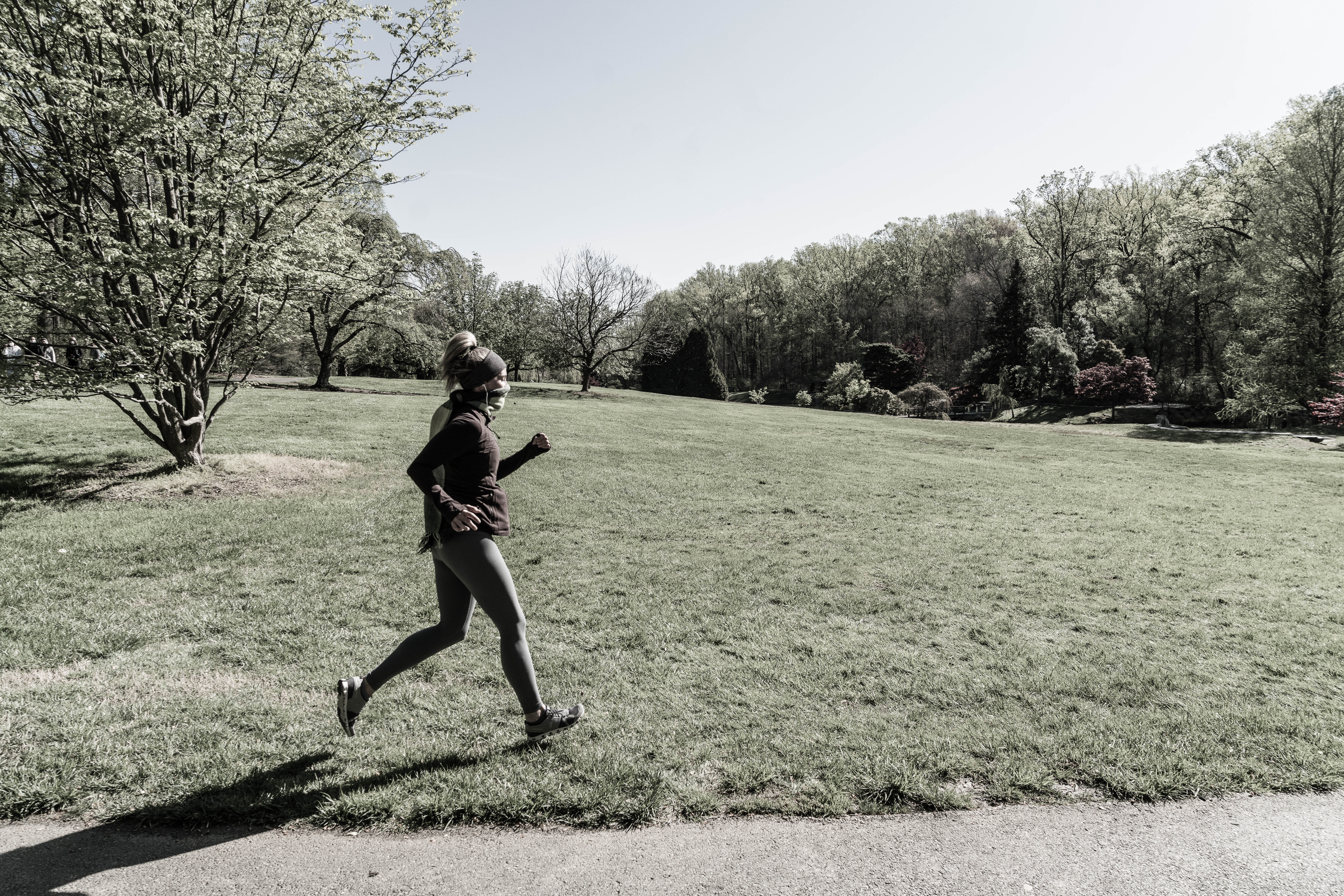













© Judah Lifschitz 2020

 Uncharted Territory
Recent Comments